Business Name: BeeHive Homes of Clovis
Address: 2305 N Norris St, Clovis, NM 88101
Phone: (505) 591-7025
BeeHive Homes of Clovis
Beehive Homes of Clovis assisted living care is ideal for those who value their independence but require help with some of the activities of daily living. Residents enjoy 24-hour support, private bedrooms with baths, medication monitoring, home-cooked meals, housekeeping and laundry services, social activities and outings, and daily physical and mental exercise opportunities. Beehive Homes memory care services accommodates the growing number of seniors affected by memory loss and dementia. Beehive Homes offers respite (short-term) care for your loved one should the need arise. Whether help is needed after a surgery or illness, for vacation coverage, or just a break from the routine, respite care provides you peace of mind for any length of stay.
2305 N Norris St, Clovis, NM 88101
Business Hours
Monday thru Sunday: 9:00am to 5:00pm
TikTok: https://tiktok.com/@beehivehomes_clovis
YouTube: https://www.youtube.com/@WelcomeHomeBeeHiveHomes
Facebook: https://www.facebook.com/beehiveclovis
Instagram: https://www.instagram.com/beehivehomesclovis/
Families typically do not start researching senior care due to the fact that they have extra time on their hands. Something has actually altered. A parent left the stove on. A spouse wandered outdoors and could not remember the method home. Medications are getting mixed up. Or a caregiver at home is merely exhausted.
That is often when the exact same pair of terms appear on every search engine result and brochure: assisted living and memory care. They sound similar. They in some cases even rest on the exact same school. Yet they serve really different requirements, with very various environments, expenses, and expectations for household involvement.
I have actually sat at the table with adult children who felt massive regret handing over a loved one's care. I have actually also spoken with partners who waited too long, and arrived desperate and stressed out. The differences in between assisted living and memory care matter, not only for security and quality of life, however for protecting family relationships.
This guide unloads those differences in practical, real‑world terms so you can decide that fits your household, not just a brochure.
What assisted living really offers
Assisted living is created for older grownups who are primarily independent, however need help with some day-to-day jobs. Think about somebody who can carry on a conversation, enjoy social activities, and make standard decisions, yet battles with cooking, housekeeping, bathing securely, or keeping an eye on numerous medications.
Typical locals may be in their late seventies to mid‑eighties, though age alone is a poor predictor. I have seen sharp 95‑year‑olds grow in assisted living, and 72‑year‑olds for whom it was already the incorrect setting due to cognitive decline.
At its finest, assisted living supplies a mix of privacy, assistance, and built‑in neighborhood. Residents usually have their own home or room, often with a private bathroom and kitchenette. Personnel check in, offer reminders, assist with dressing or showering, and offer meals, activities, and transportation. The goal is to support independence, not change it.
From a regulative perspective, assisted living is not a medical design. Staff may consist of nursing assistance, however the day‑to‑day care is provided mostly by assistants or resident assistants. Certified nursing personnel may exist just part of the day, depending upon the state. That matters when a resident's health changes unexpectedly, or when memory problems progress.
Families in some cases presume that when a loved one is in assisted living, the neighborhood can change forever as needs increase. In truth, there is a ceiling. As cognitive impairment or medical intricacy worsens, assisted living often ends up being a bad fit, and sometimes unsafe.
How memory care varies in practice
Memory care is designed particularly for individuals with Alzheimer's disease, vascular dementia, Lewy body dementia, and other forms of significant cognitive impairment. While assisted living centers on physical help, memory care covers every part of the day in structure and assistance tailored to amnesia and confusion.
Here are the core practical differences most households notice when they walk into a good memory care system:
- Security and layout: Memory care is typically in a protected environment, with controlled exits, enclosed outdoor areas, and hallways developed to decrease confusion. Doors might have alarms, and roaming patterns are prepared for instead of viewed as misbehavior. Staff training and ratios: Personnel in memory care usually get more extensive training in dementia, habits changes, and communication methods. Ratios of staff to citizens are frequently higher, specifically at nights and overnight. Daily rhythm: Activities are more structured, repeated, and sensory oriented. There is less focus on complicated group programs and more on smaller, routine‑based interactions that feel familiar and calming. Care expectations: Support with all activities of daily living prevails. Cueing, hands‑on help, and one‑to‑one interventions belong to everyday life, not exceptions.
Families sometimes withstand memory care due to the fact that of the word "locked." It can feel harsh, or like a loss of liberty. Yet, for somebody who no longer understands traffic, strangers, or ranges, a guaranteed environment is actually what permits safe freedom. Citizens can move about, check out, and often even garden, without the consistent risk of elopement.
The other major distinction is behavioral assistance. Assisted living neighborhoods often struggle with homeowners who have actually increased agitation, sundowning, resistance to care, or delusions. Memory care teams, at their best, anticipate these behaviors, change the environment, and utilize non‑pharmacological tools along with medications to keep citizens comfortable and safe.
Where assisted living and memory care overlap
Not every situation is clear cut. Assisted living and memory care sit on a continuum of senior care, and numerous neighborhoods provide both. It assists to understand the overlapping locations, so you can identify when a line has been crossed.
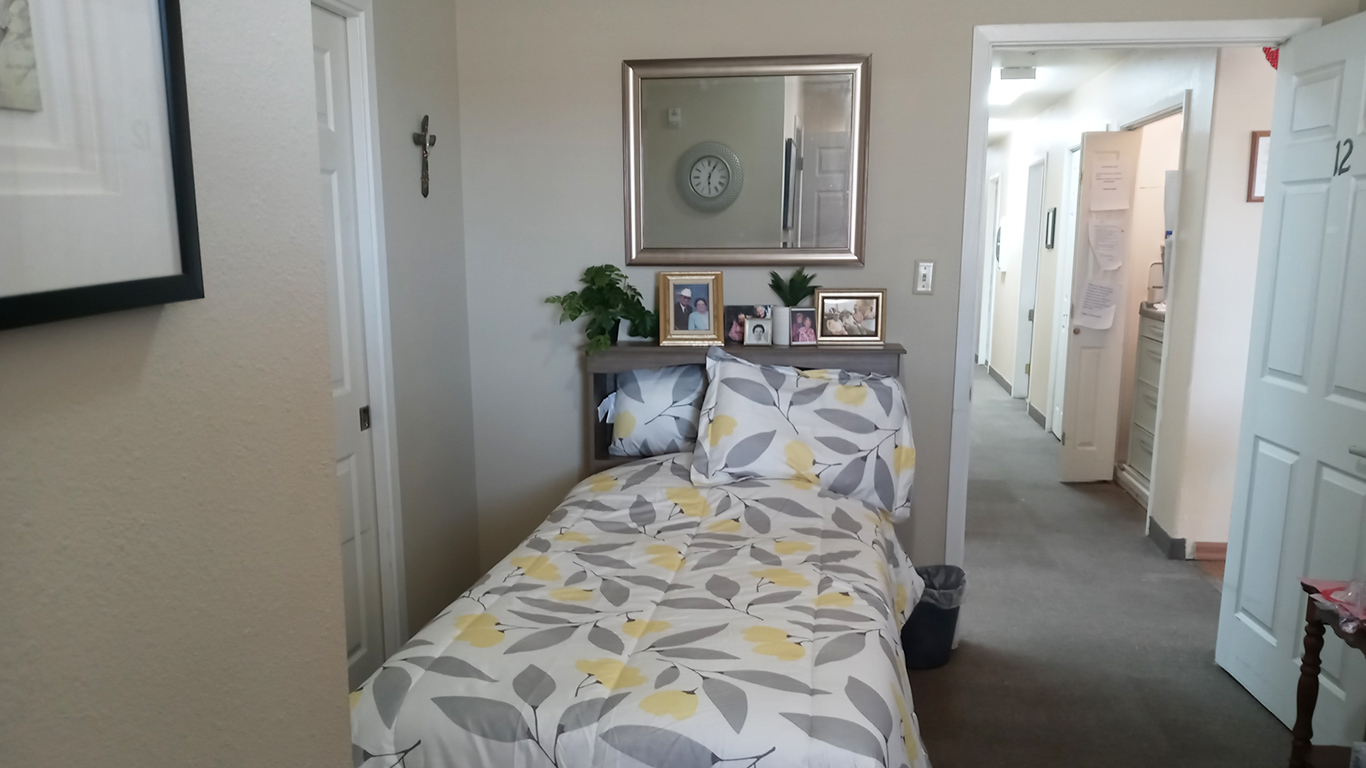
Both settings are residential senior care choices that provide meals, assistance with activities of daily living, house cleaning, and social engagement. Both generally handle basic medication management and coordinate with outside medical suppliers. Both use month-to-month charges, typically tiered based upon level of care.
Some assisted living communities market a "memory assistance" or "cognitive care" program within the wider building. The quality of these programs differs widely. Sometimes, it means a devoted, protected wing and staff with additional training, very comparable to stand‑alone memory care. In others, it merely indicates additional activities or a couple of customized staff without ecological changes.
Families should look beyond labels. A resident with really moderate amnesia who requires easy tips may do fine in assisted living for many years. A resident with fast progression, wandering, or behavior changes may need memory care from the start.
The overlap also appears in transitions. Numerous locals begin in assisted living and later move to memory care in the exact same neighborhood. That can decrease disturbance if the school handles shifts well. However, even when the address remains the exact same, the expectations, regimens, and costs frequently change significantly.
Key concerns to help you choose
When I sit with families, I rarely start by noting services or square video footage. I start with what daily life presently appears like, and where the stress points are. Several patterns reliably signal which environment is more appropriate.
Assisted living might be proper if your loved one:
- Can typically discover their way around familiar spaces, acknowledge household, and understand where they live, even if they duplicate questions or lose items. Needs reminders and some physical assistance, but will accept help without major resistance, anger, or fear. Can securely be left alone for short periods in the house, with minimal risk of roaming, leaving the house during the night, or interacting unsafely with strangers.
Memory care typically makes more sense if your loved one:
- Has wandered outside, gotten lost, or needed cops or neighbors to help them home. Is up and moving during the night, opening doors, or searching through cabinets without comprehending risk. Has substantial trouble handling personal hygiene, dressing appropriately for weather condition, or recognizing when they are hungry, thirsty, or in pain. Shows fear, frequent aggression, or strong resistance when household tries to aid with bathing, medications, or toileting.
There is also the concern of the primary caretaker's health and capacity. A frail spouse can not safely manage high falls danger, strong agitation, or consistent nighttime monitoring, even if the person with dementia is emotionally not ready to leave home. Overlooking caretaker burnout is one of the biggest errors I see.
A more detailed take a look at safety and supervision
Safety tends to be the dividing line between settings. Assisted living is suitable when supervision can be intermittent and light. Personnel look at residents, escort them to meals, and react when the call bell rings. Residents might be complimentary to come and opt for household, often with their own cars and truck if they are still driving and pass any required assessments.
In memory care, guidance is continuous. Staff are present and moving through the space, preparing for needs. They learn each resident's patterns, such as who likes to speed, who sundowns, who attempts door handles, and who gets distressed in noise. The environment is constructed around fall avoidance, minimized overstimulation, and clear visual cues.
Fire security and emergency situation reaction likewise differ. In lots of assisted living communities, homeowners are expected to follow basic directions during an emergency. In memory care, drills and treatments represent citizens who can not understand guidelines or who may attempt to flee in the incorrect direction.
Medication security is another angle. In assisted living, a resident with only moderate memory issues may self‑administer medications with oversight and periodic pointers. In memory care, personnel normally manage every dosage. That shift alone can avoid avoided medications, double dosing, or unsafe mixing with alcohol.
Families in some cases undervalue how quickly a benign scenario can end up being critical. A resident who forgets a walker "just this when" and falls on a tough floor might end up in the healthcare facility, then competent nursing, and decrease quickly from there. Choosing a setting that realistically matches present and near‑future requirements is a kind of avoidance, not overreaction.
Quality of life, not just safety
Safety comes first, but it is not the entire story. I have actually seen individuals positioned in a higher level of care than they needed, and the main casualty was quality of dementia care beehivehomes.com life. A cognitively sharp older adult stuck in a memory care unit will feel out of place and frequently depressed. Somebody with mid‑stage dementia placed in a busy, socially oriented assisted living can become nervous and withdrawn.
The right environment ought to offer your loved one room to succeed. In assisted living, that may indicate:

Residents who can still manage these activities with modest assistance tend to thrive socially. They still see themselves as independent adults, not patients.
Memory care moves the focus from self-reliance to psychological convenience and connection. Success looks different. An excellent memory care day may include:
Residents here are not being "kept hectic" for its own sake. The goal is to decrease stress and anxiety and distress, avoid dullness that can cause behaviors, and protect a sense of self through familiar patterns.
Family participation is part of this. In assisted living, visits might center around getaways, shared meals, or assisting with errands. In memory care, visits may be much shorter but more sensory and psychological, such as taking a look at image albums, listening to favorite music, or holding hands throughout a peaceful afternoon.
How respite care fits into the decision
Respite care is short‑term care in a senior living setting, frequently varying from a couple of days to numerous weeks. It can be offered in assisted living or memory care, depending upon the person's needs. For numerous households, it ends up being both a lifeline and a way to "test‑drive" a setting.
Imagine an adult daughter taking care of her father with moderate dementia at home. She has not had an undisturbed night's sleep in months. He is wandering more. She understands he most likely needs memory care, but he insists he is great. Setting up a 2‑week respite stay in a memory care system can serve numerous purposes: providing her rest, letting him experience the setting, and enabling specialists to observe and offer feedback.
Respite stays make sense in a number of scenarios:
Caregivers should not see respite care as failure or abandonment. Utilized wisely, it extends the time a person can safely remain in your home. It likewise provides families a realistic view of what round‑the‑clock assistance appears like, long before a crisis forces a long-term move.

When checking out respite, ask if the terms, rates, and apartment will be similar for long‑term locals. A respite experience that feels dramatically better or even worse than typical life in the community will not assist you make a reliable decision.
Cost, contracts, and financial trade‑offs
Cost is rarely the first thing households want to talk about, but it forms what is possible. Memory care is normally more pricey than assisted living, often by a few thousand dollars monthly, since of higher staffing requirements and specialized programming.
Most assisted living and memory care neighborhoods charge a base regular monthly cost, plus level‑of‑care charges based on requirements such as aid with bathing, transfers, or incontinence care. For memory care, the greater level of hands‑on help is typically assumed, so pricing structures can differ.
Insurance coverage is limited. Standard Medicare does not pay space and board in assisted living or memory care. It might spend for medical services delivered there, such as physical therapy or nursing visits. Long‑term care insurance coverage can assist, but policies differ, and not all cover memory care explicitly.
Families in some cases hesitate to relocate to memory care because of cost, intending to "manage" longer in assisted living or in the house. The concealed expense is caretaker health, lost work earnings, and the increased danger of accidents that cause hospitalization and more costly care overall.
On the other side, putting somebody too early into a highly specialized environment can deplete savings faster. That matters if your loved one is more youthful or has a gradually progressing condition, and may face a long trajectory of elderly care needs.
A cautious financial review, preferably with an expert who comprehends senior care, can help balance the risks. Ask neighborhoods for practical quotes of how costs may change over the next one to three years as requirements increase. Do not count on the most affordable quoted tier if everyone concurs your loved one's requirements are currently much higher.
How to veterinarian a community beyond the brochure
One of the most important workouts a household can do is compare 2 or 3 neighborhoods side by side, in person, at various times of day. Many places look polished throughout a mid‑morning tour. The real test is how they operate at 7 p.m. When homeowners are tired and staffing is thinner.
Consider this brief list of what to try to find and ask:
- Observe staff interactions: Do staff talk with citizens at eye level, utilize their names, and react calmly to confusion or agitation? Look for real engagement: Are citizens doing activities that match their capabilities, or simply sitting around a TV? Ask about staffing patterns: How many personnel are on during days, nights, and nights, and what is their training in dementia and elderly care? Clarify medical support: Who manages medications, what occurs if a resident's condition gets worse suddenly, and how are hospitalizations handled? Understand discharge requirements: Under what situations would your loved one be asked to relocate to a greater level of care or another facility?
If possible, talk independently with present families, not simply the marketing group. Ask what amazed them after move‑in, what the community does well, and where they struggle. Every place has vulnerable points. You want openness and a willingness to problem solve.
Pay attention, too, to how staff speak about homeowners when they believe you are not listening. Language that sounds dismissive or restless is a warning for how they will treat your loved one on a difficult day.
Planning for development and transition
Dementia is a progressive condition. Even when symptoms plateau for a while, they ultimately aggravate. Planning for that development can minimize the variety of disruptive relocations your loved one experiences.
If your relative is getting in assisted dealing with moderate cognitive disability or early dementia, ask explicitly how the community deals with progression. Some are able to support homeowners safely through moderate phases with added services. Others will require a transfer to memory care when wandering, incontinence, or behavior changes appear.
A suitable scenario, when finances permit, is a school that offers independent living, assisted living, memory care, and in some cases experienced nursing, all under one umbrella. That does not immediately guarantee quality, but it does make shifts logistically simpler and less traumatic.
Transitions themselves require attention. Moving an individual with dementia from one environment to another can momentarily intensify confusion and habits. A thoughtful community will:
You can assist by bringing familiar items, maintaining checking out routines, and coordinating with staff on your loved one's life story, comfort products, and understood triggers. The more they understand, the better they can customize care.
Balancing head and heart
Choosing between assisted living and memory care is as much a psychological decision as a medical one. Families wrestle with guilt, worry, old guarantees, and sometimes disagreement amongst siblings. The person at the center of the choice might insist they do not require any help at all.
Facts still matter. Safety occurrences, caretaker fatigue, weight reduction, duplicated medication errors, or increasing aggression are data points, not just "bad days." Equally, a resident who is flourishing in assisted living with strong support does not require to be rushed into memory care just due to the fact that of a medical diagnosis on paper.
As you weigh choices, keep in mind the underlying goal of any type of senior care: to give your loved one the best possible quality of life, with dignity, and to offer member of the family a sustainable way to remain family, not just full‑time caregivers. For numerous, that means assisted living for a season, then memory care when the time is right. For others, memory care is the most safe and kindest very first step.
The most successful choices I have actually seen originated from households who ask unpleasant concerns early, use respite care tactically, stay practical about development, and choose partners in care who communicate truthfully, especially when things get hard.
BeeHive Homes of Clovis provides assisted living care
BeeHive Homes of Clovis provides memory care services
BeeHive Homes of Clovis provides respite care services
BeeHive Homes of Clovis supports assistance with bathing and grooming
BeeHive Homes of Clovis offers private bedrooms with private bathrooms
BeeHive Homes of Clovis provides medication monitoring and documentation
BeeHive Homes of Clovis serves dietitian-approved meals
BeeHive Homes of Clovis provides housekeeping services
BeeHive Homes of Clovis provides laundry services
BeeHive Homes of Clovis offers community dining and social engagement activities
BeeHive Homes of Clovis features life enrichment activities
BeeHive Homes of Clovis supports personal care assistance during meals and daily routines
BeeHive Homes of Clovis promotes frequent physical and mental exercise opportunities
BeeHive Homes of Clovis provides a home-like residential environment
BeeHive Homes of Clovis creates customized care plans as residents’ needs change
BeeHive Homes of Clovis assesses individual resident care needs
BeeHive Homes of Clovis accepts private pay and long-term care insurance
BeeHive Homes of Clovis assists qualified veterans with Aid and Attendance benefits
BeeHive Homes of Clovis encourages meaningful resident-to-staff relationships
BeeHive Homes of Clovis delivers compassionate, attentive senior care focused on dignity and comfort
BeeHive Homes of Clovis has a phone number of (505) 591-7025
BeeHive Homes of Clovis has an address of 2305 N Norris St, Clovis, NM 88101
BeeHive Homes of Clovis has a website https://beehivehomes.com/locations/clovis/
BeeHive Homes of Clovis has Google Maps listing https://maps.app.goo.gl/SMhM3zbKaKgR1UAX6
BeeHive Homes of Clovis has TikTok page https://tiktok.com/@beehivehomes_clovis
BeeHive Homes of Clovis has Facebook page https://www.facebook.com/beehiveclovis
BeeHive Homes of Clovis has Instagram page https://www.instagram.com/beehivehomesclovis/
BeeHive Homes of Clovis has an YouTube page https://www.youtube.com/@WelcomeHomeBeeHiveHomes
BeeHive Homes of Clovis won Top Assisted Living Homes 2025
BeeHive Homes of Clovis earned Best Customer Senior Service Award 2024
BeeHive Homes of Clovis placed 1st for Senior Living Communities 2025
People Also Ask about BeeHive Homes of Clovis
What is BeeHive Homes of Clovis Living monthly room rate?
The rate depends on the level of care that is needed. We do a pre-admission evaluation for each resident to determine the level of care needed. The monthly rate is based on this evaluation. There are no hidden costs or fees
Can residents stay in BeeHive Homes until the end of their life?
Usually yes. There are exceptions, such as when there are safety issues with the resident, or they need 24 hour skilled nursing services
Do we have a nurse on staff?
No, but each BeeHive Home has a consulting Nurse available 24 – 7. if nursing services are needed, a doctor can order home health to come into the home
What are BeeHive Homes’ visiting hours?
Visiting hours are adjusted to accommodate the families and the resident’s needs… just not too early or too late
Do we have couple’s rooms available?
Yes, each home has rooms designed to accommodate couples. Please ask about the availability of these rooms
Where is BeeHive Homes of Clovis located?
BeeHive Homes of Clovis is conveniently located at 2305 N Norris St, Clovis, NM 88101. You can easily find directions on Google Maps or call at (505) 591-7025 Monday through Sunday 9:00am to 5:00pm
How can I contact BeeHive Homes of Clovis?
You can contact BeeHive Homes of Clovis by phone at: (505) 591-7025, visit their website at https://beehivehomes.com/locations/clovis/ or connect on social media via TikTok Facebook or YouTube
Residents may take a trip to the K-BOB'S Steakhouse. K-Bob’s Steakhouse offers hearty dining in a welcoming setting where residents in assisted living or memory care can enjoy senior care and respite care visits.